We use only the cookies needed to run the site and keep you signed in. No analytics, no advertising. Your answer covers anything optional we add later.

Cookie statement
IPMERC Research

Automation

3 papers

What software and AI change in hiring, and what they leave untouched.

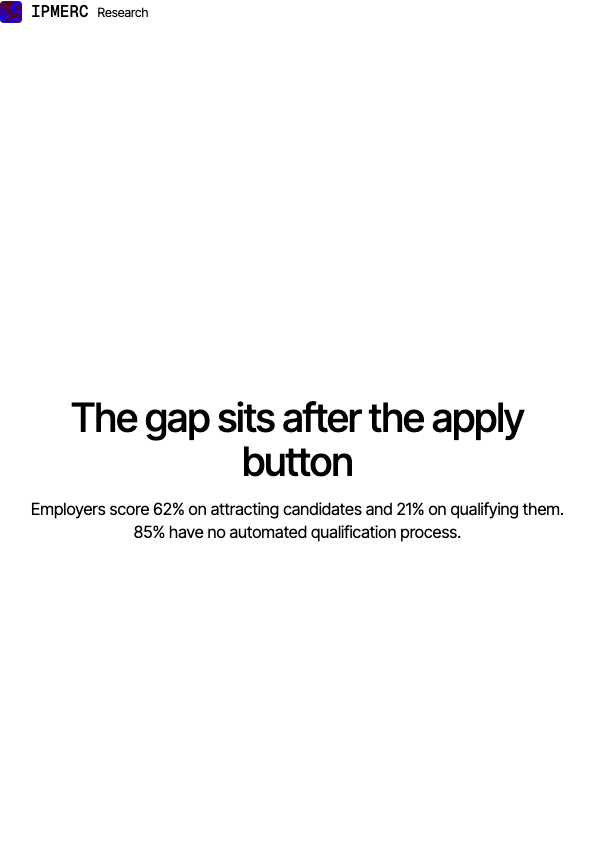
In 2026, platform vendor Phenom audited 219 employers across eight industries on the automation of their hiring process. On attracting, engaging, and converting candidates, employers average 62% of the attainable maximum. On qualification after the apply click, the same employers average 21%, a gap of 41 percentage points. 94% do not schedule an interview at the point of application. 99% do not use video interviews inline. Less than 1% have a fully orchestrated qualification process. For frontline roles, 85% sit in the lowest automation tier. For knowledge worker roles the figure is 93%. No industry scores above 30%. The data comes from a platform vendor measuring against its own product categories, and that caveat applies to every use of the figures.
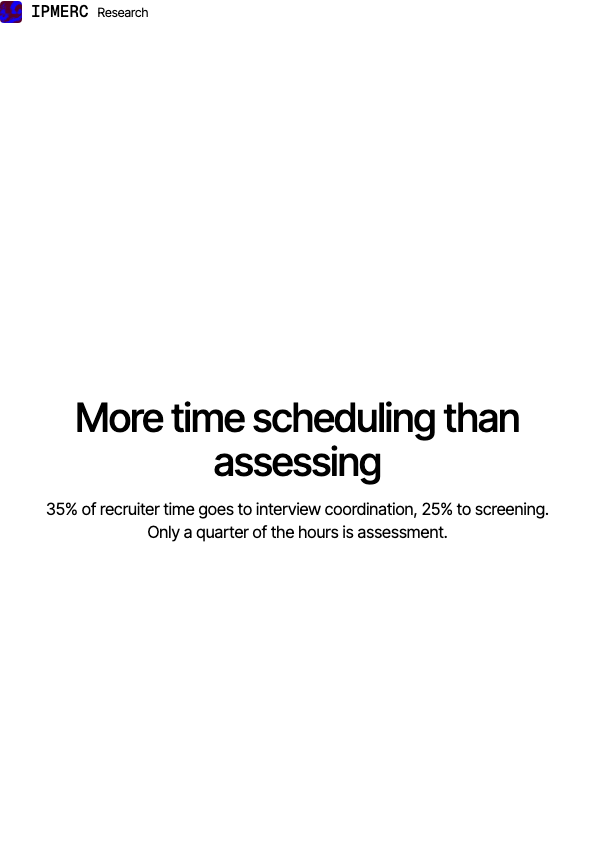
A 2026 survey of more than a hundred organisations by Aptitude Research shows that 35% of recruiter time goes to interview coordination, 25% to screening, and 24% to candidate communication. Of the 219 employers Phenom audited, 94% do not offer automated interview scheduling at the point of application. 6% do. 1% deploy a voice screening agent. 57% of surveyed organisations already use some form of automation agent, but adoption clusters at the front of the process, not at the coordination steps that consume the largest share of hours.

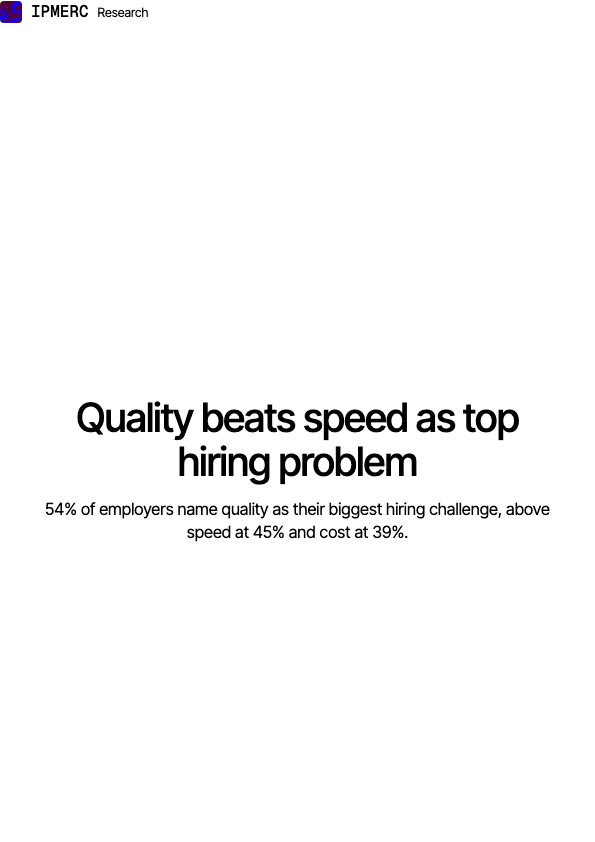
A 2026 survey of more than a hundred organisations by Aptitude Research shows that 54% name quality as the biggest hiring challenge. 45% name speed and 39% name cost. Among employers that rate their automation as effective, 42% report higher quality of hire. But 61% of the 219 audited employers apply the same automation to frontline and knowledge worker roles, with no distinction by profile type. 64% measure automation usage well, but only 60% do so consistently across role types. The shift from speed to quality changes what a client expects from an agency.